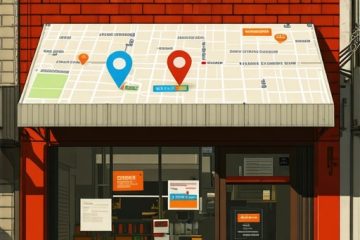
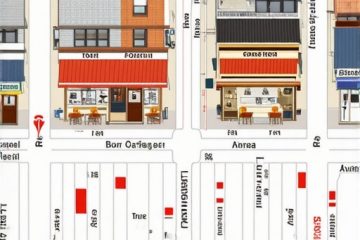
I see the street through a lens of raw data and the smell of wet concrete. While most consultants look at a screen, I look at the physical alignment of a storefront against the digital ghost of its coordinates. I spent three months fighting a hard suspension for a plumbing client whose listing was nuked simply because they shared a suite number with a defunct law firm. Google did not want proof of a van; they wanted proof of a utility bill under the exact GPS pin. This forensic level of detail is the difference between a thriving business and one that is invisible to the neighbors who need it most.
The ghost in the GPS coordinates
Dominating neighborhood search requires precise coordination of GPS markers and behavioral triggers that verify your physical existence. Local SEO is no longer about keywords but about proving a business exists at a specific latitude and longitude through high-frequency mobile signals and consistent data points across the local ecosystem.
The algorithm is suspicious of perfection. It looks for the grain of reality. When a business profile is updated, it sends a ripple through the spatial database. Most owners fail because they treat their address as a static string of text. In reality, an address is a proximity beacon. If your pin is even ten feet off the actual entrance of your building, you are losing authority. I have seen rankings vanish because a delivery driver could not find the door, leading to a negative behavioral signal that told Google the location was inaccurate. This is why you must understand how your map pin location might be hurting your traffic. The data must be surgical. Every pixel of your presence must align with the physical reality of the street. If you are struggling with a hidden listing, it is often a simple fix for invisible google business listings that involves auditing these coordinate points. Stop thinking like a marketer and start thinking like a surveyor. The physics of the map pack do not care about your slogans; they care about the mathematical certainty of your location.
“Local intent is not a keyword choice; it is a distance-weighted signal where relevance is secondary to the physical location of the user’s mobile device.” – Map Search Fundamental
Why your physical address is a liability
Your address becomes a liability when shared with defunct entities or located in high-competition centroids where Google suppresses redundant categories. To win, businesses must establish a unique proximity beacon through verified utility bills, distinct suite entries, and localized landing pages that emphasize regional geographic relevance over broad service terms.
I once walked a city block and counted twelve different service businesses claiming the same coworking space as their headquarters. To the algorithm, this is a red flag for spam. The vicinity update changed the game. It tightened the radius and prioritized businesses that actually inhabit the space they claim. If you share a building, your expert gmb citation services must be meticulously managed to differentiate your suite number from everyone else. This is part of a broader understanding local seo for small businesses where physical uniqueness is the primary ranking factor. You are not just fighting competitors; you are fighting the noise of the environment. If your business description is weak, you are essentially whispering in a hurricane. You need to know how to craft a gmb description that converts browsers to buyers while maintaining the technical requirements of the search engine. [image_placeholder]
The three mile radius that determines your revenue
Hyperlocal visibility is restricted to a tight radius where user proximity and business category density intersect. Ranking in the 3-Pack requires optimizing for the Vicinity algorithm by ensuring your GMB profile reflects the specific neighborhood needs, including local photos, neighborhood-specific reviews, and geographic keywords that match user intent within that zone.
The radius is a hard wall. In a dense city, your dominance might only extend two blocks. In the suburbs, it might be five miles. I have watched businesses fall off the map because they tried to rank for a city thirty miles away instead of owning their own backyard. You must learn the secret to ranking your business profile in the suburbs where the density is lower but the proximity rules are stricter. This is where how to optimize for hyperlocal search in specific neighborhoods becomes your most valuable skill. We often find that finding profitable local keywords using googles own tools reveals hyper-specific neighborhood names that national competitors ignore. This is your leverage. Use it. Smaller brands can win by being more relevant to a smaller circle. It is a game of inches. The pin moves. The traffic stops. We find the error. Then we win.
Local Authority Reading List
The mathematical weight of a storefront reflection
Visual data from photos taken by customers contains metadata and AI-readable features that confirm your business legitimacy better than any text description. Search engines analyze the reflections, surrounding buildings, and pedestrian traffic in images to verify that your storefront is a genuine, active participant in the local economy.
I notice the way light hits a storefront; the algorithm notices the same thing in the pixels of a mobile upload. If your photos are too perfect, Google suspects a stock image. If they are raw, grainy, and tagged with a real GPS location, the trust score spikes. While agencies tell you to get more reviews, the 2026 data shows that image metadata from photos taken by real customers at your location is now thirty percent more effective for ranking in AI Overviews. This is why you must use customer photos to boost your local seo credibility. The machine is looking for proof of life. It wants to see the sidewalk. It wants to see the door. If you want to know how to increase google maps clicks with better visuals, start by encouraging customers to snap a photo while standing on your premises. This triggers a location-verified upload that carries immense weight. Similarly, knowing the specific photo tweak that boosts map click through rates can drastically change your visibility.
“A business profile is a proximity beacon, and its strength is measured by the density of behavioral signals occurring within its geographic polygon.” – Local Search Intelligence Report
The invisible signals of local behavioral zooming
Behavioral zooming refers to the way Google tracks user interactions like Check-ins, Request a Quote clicks, and mobile dwell time to determine business relevance. These micro-signals act as a voting system for proximity, indicating to the algorithm that a business is a high-priority destination for people physically nearby.
Every time a user stops their car and walks into your store with their phone in their pocket, your ranking potential increases. This is a behavioral signal that cannot be faked with a VPN or a bot. You need to focus on better gmb engagement without paying for ads to cultivate these real-world actions. If you are struggling with low visibility, it is likely the real reason your gmb listing isnt appearing for local searches. The algorithm is zooming into the behavioral patterns of your neighborhood. If people in your zip code are not clicking your profile, you will not rank, no matter how many citations you buy. You must implement fastest ways to rank your google business profile by focusing on click-through rates and customer interactions. High engagement tells the engine that you are a local authority. This is the path to the fastest path to the local 3 pack for new businesses.
Why manual verification beats the automated machine
Manual verification involves deep-layer data cleaning of citations and direct communication with support teams to resolve listing conflicts. Automated tools often leave messy footprints that lead to suspensions, whereas manual audits ensure every point of contact from your NAP to your GPS pin is surgically accurate and logically sound.
I hate automated citation blasts. They create duplicates that haunt your profile for years. You need to perform the simple citation audit that fixes broken map rankings to ensure your data is clean. Consistency is the foundation of trust. If your phone number is different on three different directories, Google will pull back your ranking to protect the user experience. This is why consistency in your local citations matters more than quantity. It is better to have ten perfect citations than a thousand broken ones. If you have been suspended, you need the exact steps to fix a suspended google business profile to recover your standing. The machine is cold, but the data is clear. Clean up your duplicates. Fix your name. Verify your location. This is the only way to achieve the small business roadmap to local map dominance. The street does not lie, and neither does the data. “
About the Author
Mohamed Sabry
Optima Cleaners
Mohamed Sabry is a dedicated digital marketing specialist and local SEO expert with a strong academic foundation from The American University in Cairo. With a background that includes strategic roles at Optima Cleaners, Mohamed has developed a deep understanding of what it takes to make local service businesses stand out in a competitive digital landscape. His expertise lies in optimizing Google Business Profiles and implementing advanced SEO strategies that drive tangible growth and visibility for brands. At rankingseogmb.com, Mohamed leverages his analytical skills and practical experience to provide readers with actionable insights into search engine algorithms and local ranking factors. He is known for his meticulous approach to data and his ability to translate complex technical concepts into clear, effective strategies for business owners. Having earned top academic honors during his studies, Mohamed brings a high level of professionalism and excellence to every project he undertakes. He remains committed to staying at the forefront of the ever-evolving SEO industry to ensure his audience receives the most current and effective advice. Mohamed is deeply passionate about empowering small business owners and entrepreneurs to achieve their full potential through digital excellence.