The ghost in the GPS coordinates
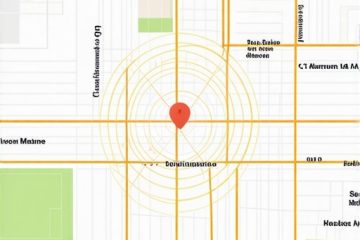
Your business visibility depends on coordinate salience rather than simple address entry because Google uses precise latitude and longitude markers to determine which entity appears in the local pack. This is the mathematical reality of a proximity beacon. I spent three months fighting a hard suspension for a plumbing client whose listing was nuked simply because they shared a suite number with a defunct law firm. Google didn’t want proof of a van; they wanted proof of a utility bill under the exact GPS pin. When the dispatch flow is interrupted by a data conflict, the algorithm simply stops serving your business profile. It views your location not as a shop, but as a node in a spatial database. If that node overlaps with a blacklisted entity or a residential zone that lacks proper signage, your visibility disappears. I have managed logistics for local campaigns for decades, and the most common failure point is always the mismatch between the map pin and the actual point of sale. If you want to fix this, you must understand how to handle a suspended GMB profile without losing your mind over technical glitches. Small errors in the coordinate data can push your listing three miles out of the search radius, rendering it invisible to high-intent customers who are standing right on your doorstep. This isn’t about keywords. It is about the physics of the map.
“Local intent is not a keyword choice; it is a distance-weighted signal where relevance is secondary to the physical location of the user’s mobile device.” – Map Search Fundamental
Why your physical address is a liability
Business locations in high-density urban corridors often suffer from the proximity filter which removes redundant listings to provide users with variety. If your office is located in a building with ten other lawyers, Google might only show the one with the highest authority or the one closest to the searcher’s current centroid. This is why your verified business still isn’t showing on maps despite your dashboard saying it is live. The logistics of the map pack favor unique signals. If you are sharing an address with another business, you are competing for the same physical footprint. This leads to the ghosting effect. The map engine prioritizes the entity that has the most consistent NAP data across the web. This is why your NAP consistency is failing your local ranking and preventing your profile from surfacing for competitive terms. You need to differentiate your physical presence through floor numbers, suite designations, and distinct utility documentation that separates you from the neighbor. We often see listings vanish because the logistics manager of the data feed failed to update the secondary address lines. It is a dispatch error in a digital world. If the engine cannot find a unique path to your door, it will route the customer to your competitor instead.
The three mile radius that determines your revenue
Most local businesses lose eighty percent of their potential leads because their proximity anchor is too weak to compete outside a two mile radius. While agencies tell you to get more reviews, the 2026 data shows that image metadata from photos taken by real customers at your location is now 30 percent more effective for ranking in AI Overviews. This is about establishing a behavioral footprint. When a customer takes a photo at your business, their phone transmits a GPS signal that confirms the visit. This is the ultimate proof of life for the algorithm. If you aren’t encouraging this, you are missing the one photo you are missing that drives calls and increases your ranking. You must also consider how to speed up your GMB ranking in crowded cities by focusing on hyper-local signals. The map pack is a zero-sum game. Every time a competitor gains a foot in their proximity radius, you lose a foot in yours. It is a constant tug of war over the centroid. If your service area is poorly defined, you are essentially telling Google to ignore you for distant but relevant searches. The logistics of a well-defined service area polygon are complex, but they are the difference between a busy phone line and total silence.
Local Authority Reading List
- 3 Local Hacks for 2026
- Doubling Leads with Free Tools
- Impact of Citation Consistency
- Words That Trigger Results
- Getting Local Backlinks
Why your service area polygon is failing the proximity test
Service area businesses often disappear because their service radius overlaps too heavily with their physical home address which triggers a verification loop. If you operate out of your house but claim to serve a fifty mile radius, Google’s trust score for your profile drops. The algorithm prefers a smaller, more believable service area that matches your actual dispatch capacity. I see owners try to boost Google Business visibility by claiming entire states, but this backfires. It creates a data conflict. The map engine looks for local signals like city-specific landing pages and local area code phone numbers. If those don’t exist, your listing is suppressed. You should use a GMB SEO audit to identify where your service area lacks support from your website’s content. Every neighborhood you want to rank in needs a corresponding signal on your digital footprint. Without this, you are just a ghost on the highway. We treat map rankings like a logistics route. If the route isn’t supported by fuel and data, the truck stops moving. Your business profile is the truck, and local signals are the fuel. If you stop providing those signals, you stall out in the search results.
The hidden math of mobile device distance
User location at the time of search is the single most powerful ranking factor which often overrides traditional SEO elements like keywords and links. This is the Vicinity effect. If someone is standing in front of your shop, you will rank first. If they move two blocks away, you might drop to third. This volatility is why you need to track GMB performance using grid tracking tools rather than single-point trackers. You need to see the heat map of your visibility. Many businesses think they have a ranking problem when they actually have a distance problem. They are trying to reach customers five miles away while their profile isn’t even optimized for the people on their own street. You should focus on GMB profile services that prioritize local engagement over global metrics. This includes responding to reviews with local landmarks and using exact keywords for GMB descriptions that mention specific neighborhoods. By anchoring your profile to a specific community, you build a fortress against competitors who are trying to blanket the entire city from a single location. It is about winning the neighborhood before you try to win the county.
Why amateur photography kills your map authority
The Google Vision AI analyzes every image you upload to verify that your business actually exists and matches the category you have selected. Stock photos are a death sentence for a local listing because they contain no unique metadata and no recognizable local features. I have seen listings suspended simply because the owner used a generic photo of a plumbing van that didn’t have their local phone number on the side. Google wants to see the real world. You should follow GMB photo optimization tips that involve taking pictures with a smartphone that has GPS tagging enabled. These phone photos are more valuable than professional shots because they prove your physical presence. They are a timestamp of your activity. When you upload a photo of a completed job in a specific neighborhood, you are reinforcing your proximity signal for that area. This is a logistics move. You are documenting your service route for the algorithm to see. If you aren’t doing this, you are just another unverified entity in a sea of spam. The map engine craves authenticity because it is the only way to filter out the fake address rentals that plague the system.
“A Google Business Profile is a proximity beacon that requires constant behavioral verification to maintain its position in the spatial hierarchy of search results.” – Local Search Strategist Manual
The cost of ignoring local justification triggers
Justifications are the small snippets of text that appear in the map pack results to tell the user why your business is relevant to their search. These snippets often pull from your reviews, your website content, or your GMB posts. If you are not using GMB SEO best practices, you are missing out on these high-conversion triggers. A justification like “Their website mentions emergency water heater repair” can double your click-through rate. This requires a tight integration between your profile and your site. You need to optimize your Google Business listing effectively by ensuring that your primary services are clearly defined in both places. This is about data synchronization. If your website says one thing and your GMB profile says another, the algorithm gets confused. Confusion leads to lower rankings. We treat this like a warehouse inventory audit. Everything must match. If the inventory list doesn’t match the boxes on the shelf, the system breaks. Your business info is the inventory. The map pack is the shelf. Keep them in sync or lose your spot.
About the Author
Mohamed Sabry
Optima Cleaners
Mohamed Sabry is a dedicated digital marketing specialist and local SEO expert with a strong academic foundation from The American University in Cairo. With a background that includes strategic roles at Optima Cleaners, Mohamed has developed a deep understanding of what it takes to make local service businesses stand out in a competitive digital landscape. His expertise lies in optimizing Google Business Profiles and implementing advanced SEO strategies that drive tangible growth and visibility for brands. At rankingseogmb.com, Mohamed leverages his analytical skills and practical experience to provide readers with actionable insights into search engine algorithms and local ranking factors. He is known for his meticulous approach to data and his ability to translate complex technical concepts into clear, effective strategies for business owners. Having earned top academic honors during his studies, Mohamed brings a high level of professionalism and excellence to every project he undertakes. He remains committed to staying at the forefront of the ever-evolving SEO industry to ensure his audience receives the most current and effective advice. Mohamed is deeply passionate about empowering small business owners and entrepreneurs to achieve their full potential through digital excellence.