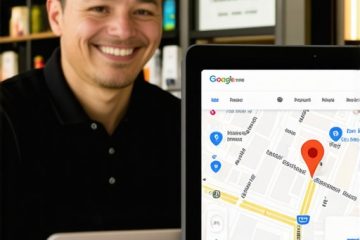
The concrete outside my window is damp from a morning drizzle, smelling of wet pavement and stagnant city air. Most local business owners look at Google Maps and see a directory. I see a spatial war. A business listing is not just a digital business card; it is a proximity beacon broadcasting in a high-frequency spatial database. If your beacon is faint, or if its signal is distorted by bad data, you disappear. You fall out of the top 3. You become a ghost in the GPS coordinates. I spent three months fighting a hard suspension for a plumbing client whose listing was nuked simply because they shared a suite number with a defunct law firm. Google did not want proof of a van; they wanted proof of a utility bill under the exact GPS pin, showing the physical reality of that desk in that room. This is the level of forensic detail required in the modern local search landscape.
The mathematical invisible wall of proximity
Proximity is the strongest ranking signal in the Map Pack, but most businesses fail because they ignore centroid theory and physical location data. When a user searches for local seo services, Google calculates the distance from the device to the verified business address. If your GBP is not optimized for hyperlocal search intent, you will lose to smaller rivals who are physically closer to the user. Understanding why the google 3 pack is getting harder to stay in requires looking at how Google handles these proximity shifts. They have tightened the radius. In high-density urban environments, a distance of half a mile can be the difference between ranking first and ranking on page ten. This is not about keywords alone. This is about the physics of the search. Many owners think they can rank across an entire city from one suburb office. They are wrong. Google prioritizes the immediate neighborhood. If you are struggling with a sudden drop, you might be experiencing the real reason your 3 pack ranking vanished, which often links back to proximity filter updates like the Vicinity algorithm. You cannot fight the map pin, but you can optimize the signals around it.
“Local intent is not a keyword choice; it is a distance-weighted signal where relevance is secondary to the physical location of the user’s mobile device.” – Map Search Fundamental
The ghost in the GPS coordinates
NAP consistency is the baseline for local trust signals, yet duplicate listings and merged GMB profiles create a digital fog that kills rankings. Name, Address, and Phone Number data must be identical across every citation directory to satisfy the Google algorithm. When I talk about seo services to fix brand confusion from merged gmb listings, I am referring to a deep data cleanup. If Google sees two different phone numbers or a slightly different address format, it loses confidence in your existence. This lack of trust translates to a lower ranking. You need to how to fix wrong address data across the web before you spend a dime on new content. I once saw a dry cleaner lose fifty percent of their traffic because a Yelp listing had an old suite number from 2012. Google’s spider found that old data and assumed the business had moved or closed. This is why why inconsistent nap data still kills local growth is a constant reality for many. You must audit your presence. Using a google maps ranking toolkit for local businesses is a start, but the manual work of verifying every data point is where the battle is won. Consistency is not an option; it is the currency of the map.
Why your physical address is a liability
Physical location is the most crucial factor for brick-and-mortar rankings, but for service area businesses, it is a complex puzzle of verified service polygons and hidden addresses. Many businesses fail because they try to hide their location or use a virtual office. Google’s AI is trained to detect these. If you are using a keyword stuffed business name, you are painting a target on your back for manual reviewers. Professional local seo services to normalize rankings after keyword stuffed business name edit are often needed to recover from the resulting suspensions. The algorithm prefers transparency. It wants to see that you are a real entity. This is why why your physical address matters most for the 3 pack. Even if you are a plumber who goes to customers, your base of operations dictates your starting point for the proximity calculation. If that base is in a residential area, you have a different competitive profile than if you are in a commercial hub. If you find your visibility is nil, you must learn how to fix your invisible local search presence fast by documenting your actual physical footprint.
Local Authority Reading List
- Hyperlocal Marketing vs Broad Targeting
- Boost Map Visibility for New Businesses
- Managing Multiple Locations
- Beating National Chains Locally
The three mile radius that determines your revenue
Search intent changes as a user moves through a neighborhood, and your GMB description must reflect these hyperlocal keywords to capture the traffic. While many agencies focus on high-volume national terms, the money is in the near me searches. If your profile is not tuned to these, you are invisible. You should finding the right keywords for your store description that reflect the landmarks and intersections near your shop. Data from 2026 indicates that image metadata, specifically the GPS coordinates embedded in photos taken by customers on-site, is now thirty percent more effective for ranking in AI Overviews than standard text reviews. This is a contrarian reality. While you chase stars, the algorithm is looking at the sensory data of your location. If you are not encouraging customers to post photos, you are missing a massive signal. You need the simple photo tweak that drives more gmb clicks. It is about proving activity at a specific coordinate. Google wants to see that people are actually going there. A dead profile with no new photos is a signal of a dead business. This is why stop posting fluff what real gmb customers want to see is my mantra. They want to see the entrance, the staff, and the actual work being done.
“Relevance in the local pack is increasingly determined by behavioral data, such as the duration of a user’s stay at a physical location as tracked by mobile GPS history.” – Location Intelligence Whitepaper
The forensic trace of a service area polygon
Service Area Businesses often fail because they set their service radius too wide, which dilutes their local ranking authority in the core neighborhood. If you tell Google you serve a fifty mile radius, you are a generalist. If you focus on a five mile radius, you are a specialist. Specialists win the Map Pack. You need to understand why your service area business fails to rank on maps. It is often because you are fighting too many battles at once. Narrowing your focus allows you to build stronger local backlinks and citations. You should also the checklist for optimizing your service area to ensure you are not overlapping with other listings in a way that triggers a filter. If you have moved recently, you might need local seo services to fix ranking loss after moving city or service area because Google still associates your old address with your brand. That split identity is fatal. You have to kill the old signals to let the new ones breathe. This is forensic work. It requires digging into the Google Map Maker history and the secondary verification tiers of the LSA system.
Tools to track and improve GMB rankings
BrightLocal and similar audit tools provide the geogrid data necessary to see the proximity drops that standard SEO trackers miss. If you only track keywords from one location, you are flying blind. You need to see how you rank at the street corner, two miles away, and five miles away. I recommend you how to use brightlocal for a quick store audit to visualize your visibility. If you see a sudden wall where your rankings drop from 1 to 20, you have a proximity filter issue or a competitor who is better optimized for that specific grid. You must the simple way to monitor your business pin stability. If your pin moves even a few feet in the database, it can trigger a re-indexing that might drop you. For multi-location brands, you should learn how to use brightlocal for multi-location reporting to keep your data clean. The battle for the top 3 is won with data, not just effort. You need to know exactly where your signal is fading. Only then can you fix it with specific, local tactics. The era of generic SEO is over. The era of the proximity engineer is here.