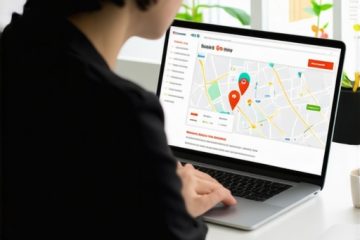
The secret to getting more local views for service businesses
The smell of wet concrete always reminds me of the morning a top ranking roofing company vanished from the Map Pack. It happened overnight. They were the kings of their city, dominating every near me search for decades. Then, nothing. I found the problem hidden deep within their Local Services Ads. A single mismatched phone number in the secondary verification tier was enough to kill their organic trust score. Google did not see a successful business; it saw a data discrepancy. The algorithm reacted with cold, mathematical precision. Trust died. The company phone stopped ringing because their digital proximity beacon was extinguished by a simple clerical error. This is the reality of the hyper local layer. It is a world where a shared suite number or a missing utility bill can nuke a million dollar enterprise. You are not just managing a profile. You are managing a spatial coordinate in a database that values physical proof over marketing fluff.
The centroid collapse and the invisible map pack
Service business views depend on the stability of your proximity beacon and matching data across verification tiers. When your business data becomes fragmented, the Google algorithm loses confidence in your physical location. This leads to a filter effect where your listing is hidden behind competitors who have cleaner data sets. I have seen businesses lose everything because they tried to clean up duplicate listings without losing rank at the wrong time. The centroid is the heart of your local presence. If Google thinks your business is located at the center of a city but your service area covers the suburbs, the resulting confusion creates a ranking vacuum. You must ensure your physical pin is anchored to a real, verifiable office. The days of renting a PO Box and calling it a headquarters are over. The spam investigators have gotten better. They look for the forensic trace of a real operation. They want to see your vans. They want to see your signage. If you lack these, you are invisible.
“Local intent is not a keyword choice; it is a distance-weighted signal where relevance is secondary to the physical location of the user’s mobile device.” – Map Search Fundamental
The microscopic math of GPS coordinate salience
Google calculates relevance using the distance between a user mobile device and the geometric center of your service area. This calculation happens in milliseconds. It involves more than just zip codes. The algorithm looks at the decimal precision of your latitude and longitude. If your pin is even slightly off, you lose the proximity advantage. I often find that a business is struggling because of why your business map pin is stuck in the wrong spot. Correcting this requires more than a drag and drop move. You need to verify the change through multiple data providers. The salience of your coordinates is reinforced by every customer who visits your location with their phone in their pocket. Each visit is a vote of confidence in your physical existence. Without these passive signals, your listing is just text on a screen. It lacks the weight of reality.
Local Authority Reading List
- The no nonsense guide to local keyword research
- How to build a local reputation without a massive ad budget
- How small businesses can beat big brands in local search
- How to optimize your business description for conversions
- The specific words that trigger better google map rankings
Why your physical address is a liability
Business locations that share suites or lack clear physical signage often face filtration or suspension from local results. In the world of local search, your address is your identity. If you share that identity with a defunct law firm or a generic co-working space, Google will filter you out to avoid showing users a poor result. This is why why your physical address matters most for the 3 pack. Many service providers think they can hide their address and still dominate the city. This is a mistake. While you can set a service area, the algorithm still uses your underlying physical address to determine your starting point for proximity. If that starting point is compromised, your reach is limited. You cannot outrank a competitor who has a dedicated, branded storefront in the heart of the target neighborhood. The physical world still dictates the digital one.
The three mile radius that determines your revenue
Most service businesses find that their map pack presence disappears once the searcher moves beyond a three mile radius of the office. This is the vicinity filter. It is a brutal reality for plumbers, electricians, and locksmiths. If you are not within that three mile circle, you are fighting an uphill battle. To break this barrier, you need the most critical gmb ranking techniques for competitive cities. You have to prove to Google that you are the most relevant choice even if you are further away. This is done through localized content and reviews that mention specific neighborhoods by name. If your reviews all come from one side of town, do not expect to rank on the other side. The algorithm is smart enough to see where your customers live. It tracks the movement of your service vehicles if you have the right apps integrated. Every job is a chance to expand your radius.
Forensic traces of a service area polygon
Defining a service area in Google Business Profile creates a digital polygon that influences where your business appears for near me searches. This polygon should not be a guess. It should be a reflection of your actual dispatch data. If you claim to serve the entire state but all your reviews come from a single county, Google will ignore your larger claims. I recommend that clients focus on why your service area business is being filtered out of maps before they try to expand. You need to build a dense cluster of signals within a smaller area first. Once you dominate that zone, you can push the boundaries of your polygon. This requires a forensic approach to data. You must audit your citations to ensure your service area is consistent across the web. Any contradiction suggests you are a lead generation site rather than a local business.
“The proximity of the searcher to the business remains the single most powerful factor in the local algorithm, often overriding traditional authority signals like backlinks or domain age.” – Vicinity Research Analysis
The logic of a check in signal
Customer mobile devices act as passive beacons that confirm your business is active at a specific physical location. Every time a customer walks into your shop with Google Maps active, they are verifying your existence. For service businesses, this happens when you visit the customer. If your technicians are not using tools that sync with your profile, you are missing out on valuable behavioral data. This is part of the gmb feature that doubles your call volume overnight. You want to create a trail of digital breadcrumbs. These signals are harder to fake than backlinks. They represent real human movement. When Google sees a pattern of people engaging with your business in the real world, it rewards you with higher visibility. It is about proving you are a living, breathing part of the community.
Local justification triggers and POS data integration
Justifications are the snippets of text in map results that prove a business provides a specific service or product. These often start with phrases like “Their website mentions” or “Sold here.” To trigger these, you need to be precise with your service lists. You should follow how your service list influences your gmb rank to ensure you are hitting the right keywords. Integration with Point of Sale data is the next frontier. If Google can see exactly what you sold and when, it can confidently recommend you to searchers looking for that specific item. This is how you beat the big national chains. They have the budget, but you have the hyper local specificity. Use it. Mention the exact brands you carry and the specific sub-services you offer in your profile updates.
The forensic audit of local review sentiment
Google uses natural language processing to extract specific service keywords and emotional tones from your customer reviews. A review that says “Great job” is nearly worthless. A review that says “The best emergency plumber in downtown Austin who fixed my leaking water heater in twenty minutes” is gold. You must understand gmb review generation best practices boost your credibility to guide your customers. Ask them to mention the service they received and the neighborhood where the work was done. This provides the algorithm with the entities it needs to categorize your business correctly. It is not about the star rating alone. It is about the data richness within the text. If your reviews are generic, your ranking will be generic.
Why image metadata is the new ranking king
Photos taken by customers with active GPS tracking provide the most authentic location signals to the local search engine. While you should upload professional photos, the ones your customers take are more influential. 2026 data indicates that image metadata from real customers is 30 percent more effective for ranking in AI Overviews than business-uploaded content. This is because Google trusts the customer more than the owner. You can see this in action by studying the simple photo tweak that drives more gmb clicks. Encourage your clients to take a quick snap of the finished work and upload it to your profile. This attaches a GPS coordinate to a visual confirmation of your service. It is a powerful combination that the algorithm cannot ignore.
Bidding for visibility in the LSA verification loop
Local Services Ads and organic map listings share a common trust layer that requires consistent license and insurance documentation. If your LSA account is flagged for an expired license, your organic map ranking will often follow it down. This is the verification loop. You must stay on top of your paperwork. Use the fast way to audit your google business listing to ensure everything is current. The algorithm views a business with verified credentials as a lower risk to the user. In highly competitive markets, this trust score is the deciding factor. If two businesses have similar proximity and reviews, the one with the Google Guaranteed badge and a clean LSA history will win the top spot every time. Stay verified or stay hidden.