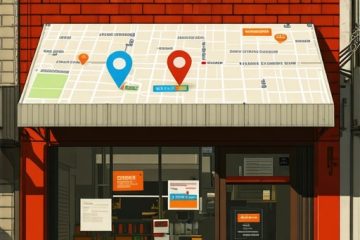
The smell of peppermint and old, dusty paper always reminds me of the basement of a city records office. It is the scent of proof. In the world of local search, proof is the only currency that matters. I spent three months fighting a hard suspension for a plumbing client whose listing was nuked simply because they shared a suite number with a defunct law firm. Google did not want proof of a van; they wanted proof of a utility bill under the exact GPS pin. That experience taught me that a business listing is not just a profile. It is a Proximity Beacon in a complex spatial database. If you want to dominate the Map Pack, you must stop thinking like a marketer and start thinking like a logistics manager who understands the physics of a 3 mile radius. You can steal customers from rivals by exploiting the glitches in their data and perfecting the mathematical weight of your own local signals.
The ghost in the GPS coordinates
Hyperlocal strategy focuses on the mathematical precision of your physical location to win the trust of the Google algorithm. It involves proving your presence through unforgeable signals such as utility bills, GPS-tagged imagery, and consistent NAP data. This rigorous approach is how you reclaim market share from competitors who use shortcuts. Most businesses treat their address as a static line of text. This is a mistake. Google sees your location as a set of coordinates that must align with every other mention of your business online. I have seen rankings collapse because a business used a slightly different suite format on a random directory. If you are struggling, a GMB SEO audit can reveal these hidden data mismatches. You must ensure your pin is exactly where the customer enters the building. Even a ten foot shift can move you out of the primary centroid for high intent searches.
“Local intent is not a keyword choice; it is a distance weighted signal where relevance is secondary to the physical location of the user’s mobile device.” – Map Search Fundamentals
Why your physical address is a liability
Local SEO ranking tips often ignore the danger of shared suites or industrial zones where data overlap occurs. If your business shares an address with a high risk category, Google might filter your listing out to prevent spam. You must distance your digital identity from neighbors to keep your position. I despise agencies that suggest address rentals or virtual offices. Google knows. They look for the forensic trace of a real business. This includes things like local business licenses and photos of your permanent signage. If your listing is not showing up, it might be a simple fix for invisible Google Business listings that involves re-verifying your physical space. The algorithm is aggressive because it wants to protect the user experience from fake listings. You win by being the most verifiable entity in your neighborhood.
Local Authority Reading List
- Mastering Google Business SEO Your Complete Guide
- Unlocking Google Maps SEO Tips for Local Visibility
- Expert GMB Citation Services for Enhanced Rankings
- Comprehensive Local SEO Optimization Techniques
The three mile radius that determines your revenue
Google Maps SEO is governed by the user’s distance from your front door at the moment of the search. You cannot rank for an entire city at once without a sophisticated multi location strategy. Successful businesses dominate a tight circle first and then expand their reach. You should look into why your service area radius might be hurting your GMB rank if you are trying to cover too much ground. When you set a radius that is too large, you dilute your relevance for the core area. It is better to have a three mile radius where you are the undisputed leader than a twenty mile radius where you are on page four. Use hyperlocal search in specific neighborhoods to build authority. This involves mentioning local landmarks and using neighborhood names in your updates. This creates a spatial relevance that national brands cannot replicate.
How reviews affect SEO
Review signals are about more than star counts or having the most feedback in the city. Google analyzes the sentiment and keywords within the text to understand what services you actually provide to real people. Genuine customer photos attached to reviews provide a massive boost in AI visibility because they confirm the physical experience. You can find GMB review generation best practices that emphasize quality over sheer volume. I remember a case where a local cafe owner called me at midnight because a competitor dropped twenty 1 star reviews in an hour. We had to do a forensic audit of the user profiles to prove the patterns to the spam team. It is not just about getting reviews; it is about protecting the integrity of your profile. Fake reviews will eventually destroy your map ranking because Google detects the VPN patterns used by review farms. Focus on real customers who can mention specific services in their feedback.
“Relevance is determined by how well a local business profile matches what someone is searching for, but proximity is the final arbiter of the 3-Pack order.” – Local Search Algorithm Whitepaper
The truth about GMB profile services
GMB profile services should focus on technical accuracy and behavioral signals rather than just filling out forms. Most agencies sell you a generic setup that fails to trigger the local justification signals Google needs to see. You need a strategy that involves optimizing your Google Business listing effectively by using the right categories and attributes. Do not ignore the Q&A section. This is a place where you can insert natural language answers that mirror the way people talk. Use GMB tools that actually move the needle to track your progress and adjust your tactics. If you are a service area business, follow the GMB audit checklist for service area businesses to ensure your hidden address is not causing a conflict. The key is to be active. Post photos of your team at work. Update your hours for every holiday. These small behavioral signals tell Google that your business is alive and well.
The forensic trace of a service area
Local SEO FAQs often ask how a business without a physical storefront can compete with those that have one. The answer lies in the service area polygon and the proximity of your recent work. Google looks at where your customers are when they leave reviews. If you are a contractor, have your team take photos on their phones at the job site. This embeds metadata that proves your team was physically present in that specific neighborhood. Use geo tagged photos to boost your local SEO listing and create a trail of proof. This is far more effective than buying cheap local SEO citations that do not carry any weight. You must also understand the truth about GMB verification for home based businesses to avoid the dreaded suspension. The algorithm is designed to favor businesses that are truly part of the local community. If you act like a local leader, Google will treat you like one.
About the Author
Mohamed Sabry
Optima Cleaners
Mohamed Sabry is a dedicated digital marketing specialist and local SEO expert with a strong academic foundation from The American University in Cairo. With a background that includes strategic roles at Optima Cleaners, Mohamed has developed a deep understanding of what it takes to make local service businesses stand out in a competitive digital landscape. His expertise lies in optimizing Google Business Profiles and implementing advanced SEO strategies that drive tangible growth and visibility for brands. At rankingseogmb.com, Mohamed leverages his analytical skills and practical experience to provide readers with actionable insights into search engine algorithms and local ranking factors. He is known for his meticulous approach to data and his ability to translate complex technical concepts into clear, effective strategies for business owners. Having earned top academic honors during his studies, Mohamed brings a high level of professionalism and excellence to every project he undertakes. He remains committed to staying at the forefront of the ever-evolving SEO industry to ensure his audience receives the most current and effective advice. Mohamed is deeply passionate about empowering small business owners and entrepreneurs to achieve their full potential through digital excellence.