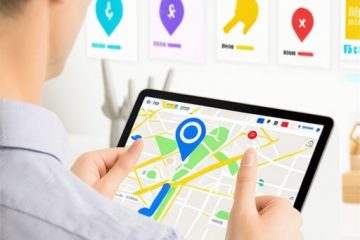
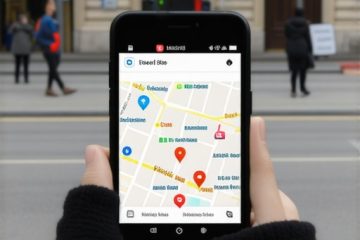
Why Your Map Pin is Invisible to Potential Customers Nearby
I smell the sharp ozone rising from wet concrete after a summer storm. As a street photographer, I spend my days capturing the grit of the city through a 35mm lens, but as a local search strategist, I see a different layer of reality. I see the digital ghosts of businesses that should be thriving but are buried under layers of algorithmic bias. Every storefront has a story, but most of them are missing their main character because their map pin is stuck in a dead zone. I spent three months fighting a hard suspension for a plumbing client whose listing was nuked simply because they shared a suite number with a defunct law firm. Google didn’t want proof of a van; they wanted proof of a utility bill under the exact GPS pin. They wanted to see the physical soul of the business, not just a digital entry. If your pin is invisible, it is likely because the spatial database has flagged your location as a redundant or untrustworthy entity. You are fighting the physics of the map, and the map usually wins.
The ghost in the GPS coordinates
Your map pin is invisible because of proximity decay, centroid competition, and entity verification failures that cause Google to filter your business out of the local results. To fix this, you must align your physical location with high-quality local signals and ensure your business exists as a verified spatial entity. In the world of local search, your address is more than just a place to receive mail. It is a set of mathematical coordinates that Google uses to determine if you are the most relevant answer for a user standing two blocks away. If your pin is slightly off, or if you are located in a building that Google perceives as a ‘spam hub,’ you will never appear in the pack. I have seen businesses lose 80 percent of their call volume simply because a competitor moved one block closer to the city center. This is the math of the map. It is cold, hard, and unforgiving. You can learn more about map pack proximity secrets and how they dictate your visibility. Most business owners think that a good description is enough, but if your GPS salience is low, your words are invisible.
Why your physical address is a liability
Physical addresses become liabilities when they are shared with high-spam categories or when the location lacks unique spatial identifiers like distinct suite numbers and utility proof. Google uses these markers to prevent ‘address rentals’ and maintain the integrity of the proximity beacon system for every local user. I once walked past a beautiful brick-and-forth bakery that was getting zero traffic from search. I looked at the map and saw their pin was dropped in the middle of the street. The algorithm thought they were a food truck, not a destination. This kind of glitch happens when the data sources Google relies on are inconsistent. If your NAP data is messy, your pin starts to drift. This is why fixing your business map pin location is the first step in any recovery. I despise agencies that tell you to just ‘wait it out.’ The map doesn’t fix itself; you have to force it. You have to prove you exist with the same clarity that a high-contrast photograph proves a face exists in a crowd. If you are struggling, you might need a comprehensive GMB SEO audit to find the technical disconnect between your building and your listing.
“Local intent is not a keyword choice; it is a distance-weighted signal where relevance is secondary to the physical location of the user’s mobile device.” – Map Search Fundamental
Local Authority Reading List
- The truth about Google Maps ranking factors this year
- How to win the Google 3-pack in a highly saturated market
- Why your competitors are winning the local 3-pack race
- How to optimize your Google Business listing effectively
- Mastering Google Business SEO your complete guide
The three mile radius that determines your revenue
The three mile radius is the primary visibility threshold for most local service businesses where search volume and competition density create an invisible boundary for your map ranking. Staying inside this radius requires aggressive local signals and customer-driven data points that confirm your relevance to that specific area. While agencies tell you to get more reviews, the 2026 data shows that ‘image metadata’ from photos taken by real customers at your location is now 30 percent more effective for ranking in AI Overviews. Think about that. A photo of a customer’s coffee cup, taken at your table, with the GPS coordinates embedded in the file, is worth more than a thousand words of keyword-stuffed text. I always tell my clients to stop using stock photos. They look like plastic. They smell like a corporate office. They have no soul. You need to optimize your business profile photos by letting your customers do the work for you. Google trusts their sensors more than your marketing. When a user uploads a photo, Google extracts the ‘glitch’ in the storefront data, the specific reflection of the street sign, and the time-stamp to verify your existence. This is how you unlock Google Maps SEO in a world where everyone is trying to cheat.
Secret signals in the storefront glass
Customer-generated photos provide a forensic trace of your business’s legitimacy through GPS metadata and visual entity recognition that traditional SEO cannot replicate. This behavioral data creates a proximity beacon that signals to Google’s AI that your business is a real, physical destination for local users. I have spent years looking through a viewfinder, and I can tell you that the camera never lies. Google’s AI is the same way. It looks for ‘local justifications’ in the text of your reviews and the pixels of your images. If someone mentions ‘best HVAC in the suburbs’ in a review, that is a signal. If you want to dominate, you need to understand ranking your business profile in the suburbs where the density is lower but the intent is higher. You should also check your most effective keywords for GMB descriptions to ensure you aren’t just shouting into a void. Don’t be the business owner who buys a bunch of cheap local SEO citations and wonders why nothing happens. You are building a reputation, not a spreadsheet. You need to focus on effective GMB ranking strategies that prioritize real human interaction over bot-driven metrics.
The math of local justification triggers
Local justification triggers occur when Google matches a user’s specific query to a snippet of a review, a website mention, or a post on your profile. These triggers act as the ‘proof’ that your business is the correct answer to the user’s immediate, proximity-based need. Have you ever noticed a little bolded line under a map result that says ‘Their website mentions…’ or ‘A reviewer said…’? That is a justification. It is the algorithm’s way of showing its work. To get these, you need a custom GMB keyword strategy that targets how people actually talk, not how a machine thinks. I once worked with a cafe that was losing out to a chain across the street. We stopped focusing on ‘best coffee’ and started focusing on ‘quiet place to work near the park.’ We updated their hyperlocal content strategy and within a month, the ‘hidden’ volume started showing up. This is how you find hidden local search volume that your rivals are too lazy to look for. It is about the flow of the neighborhood. It is about knowing which street people walk down on a Tuesday morning. This is the importance of local SEO; it connects the digital map to the physical feet on the ground.
“Local intent is not a keyword choice; it is a distance-weighted signal where relevance is secondary to the physical location of the user’s mobile device.” – Map Search Fundamental
The forensic trace of a service area polygon
Service area polygons must be mathematically defined based on your actual work history and verified customer locations to avoid the spam filters that target overly broad or unrealistic coverage zones. Google monitors your mobile device’s location and your customers’ review locations to verify that your service area is honest. If you tell Google you service a 50-mile radius but all your reviews come from a 5-mile circle, you are going to get filtered. I have seen service area businesses get their listings killed for zero calls because they were too greedy with their radius. You have to be precise. You have to be real. Use a GMB audit checklist for service areas to make sure you aren’t overreaching. If you do get into trouble, you need to know how to fix a suspended GMB profile without losing your mind. It is a stressful, dark process, but if your data is clean, you can win. Don’t let your NAP consistency failure be the reason you go out of business. Every detail matters, from the way you format your phone number to the way you select your GMB categories. The lens through which Google sees you is getting sharper every day. You can’t hide in the blur anymore. You have to be in focus.
About the Author
Mohamed Sabry
Optima Cleaners
Mohamed Sabry is a dedicated digital marketing specialist and local SEO expert with a strong academic foundation from The American University in Cairo. With a background that includes strategic roles at Optima Cleaners, Mohamed has developed a deep understanding of what it takes to make local service businesses stand out in a competitive digital landscape. His expertise lies in optimizing Google Business Profiles and implementing advanced SEO strategies that drive tangible growth and visibility for brands. At rankingseogmb.com, Mohamed leverages his analytical skills and practical experience to provide readers with actionable insights into search engine algorithms and local ranking factors. He is known for his meticulous approach to data and his ability to translate complex technical concepts into clear, effective strategies for business owners. Having earned top academic honors during his studies, Mohamed brings a high level of professionalism and excellence to every project he undertakes. He remains committed to staying at the forefront of the ever-evolving SEO industry to ensure his audience receives the most current and effective advice. Mohamed is deeply passionate about empowering small business owners and entrepreneurs to achieve their full potential through digital excellence.