The physics of a phantom map location
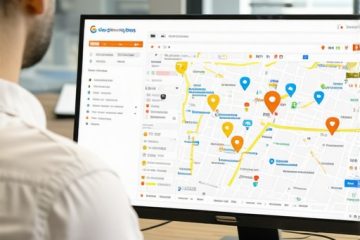
The city smells like wet concrete and exhaust fumes after a morning rain. I stand on the corner of 4th and Main looking at a brick building that houses a high end plumbing showroom. On my phone, Google Maps insists the business is located two blocks south, right in the middle of a city park. This is the glitch. It is not just a nuisance for the driver; it is a catastrophic failure of the spatial database that governs local commerce. When your pin is wrong, your revenue is wrong. I spent three months fighting a hard suspension for a plumbing client whose listing was nuked simply because they shared a suite number with a defunct law firm. Google didn’t want proof of a van; they wanted proof of a utility bill under the exact GPS pin, showing that the physical operation matched the digital coordinate. We had to document the storefront with 360 degree video and time stamped photos to convince a human reviewer that the map was the liar, not the plumber.
The ghost in the GPS coordinates
Incorrect map pin placement occurs when the geocoding engine fails to resolve specific latitude and longitude data against the physical building entrance. This spatial mismatch prevents the Google Business Profile from appearing in the Local 3-Pack because the proximity signal is tethered to a phantom coordinate. Understanding how to rank Google Business fast begins with a realization that Google does not read addresses the way humans do. It converts your street number into a set of WGS84 coordinates. If the roof of your building is large, the pin might default to the centroid of the parcel rather than the front door where customers actually park. This minor shift of fifty feet can be the difference between being the closest option for a user and being filtered out by the Vicinity update. You must manually adjust your marker in the dashboard to ensure the entrance is the focal point. This is the first step in any GMB listing optimization project. If the pin is off, every other signal you send is being calculated from the wrong starting line.
Why your physical address is a liability
The physical address of a business acts as a static anchor in a distance-weighted algorithm. If your location is outside the city centroid or obscured by industrial zoning, the Vicinity update treats your proximity as a low-relevance signal regardless of your industry authority. Many owners find that their map pin location might be hurting traffic because they are located in a corner of the city that Google does not consider a commercial hub. Proximity is a harsh mistress. It does not care that you have better prices or more experience. It cares about the travel time of the user. If you are tucked away in a business park behind a maze of one way streets, your visibility will suffer. To counter this, you need to build local authority that transcends mere distance. This involves using GMB citation services that do more than just list your name; they must link your address to local landmarks and neighborhood entities in the eyes of the search engine.
“Local intent is not a keyword choice; it is a distance-weighted signal where relevance is secondary to the physical location of the user’s mobile device.” – Map Search Fundamental
Forensic traces of a service area polygon
Service Area Businesses must define clear geographical boundaries to avoid being flagged as map spam. A poorly defined radius leads to a drop in visibility because the local search engine cannot verify the physical presence of mobile workers within the claimed service zones. For those who work on the road, SEO for service-area businesses is a different game. You do not have a pin for the public to see, but Google still has a pin for you internally. If that internal pin is at your home and your home is sixty miles away from where you want to work, you are fighting a losing battle. You need to learn how to use local service areas to expand your map reach without triggering a suspension. Do not just draw a giant circle. Use specific zip codes and cities where you can actually prove you have customers. The algorithm looks for behavioral data like where your technicians start their day and where your customers are leaving reviews from. If those two data points do not overlap, the system assumes you are faking your location.
The mathematical weight of local review sentiment
Review signals provide the behavioral proof that a business exists at its claimed location and serves the local population effectively. High sentiment scores from users whose own GPS history puts them at your storefront are weighted significantly heavier than generic feedback. I have seen businesses try to rank Google Business by buying cheap reviews from overseas. It is a death sentence. Google knows where the reviewer is. If a person in another country leaves a review for a dry cleaner in Chicago, that review carries zero weight and might even flag the listing for manual review. Real growth comes from GMB review generation best practices that focus on your actual local customers. Encourage them to mention the neighborhood by name. When a customer says the service was great in Lincoln Park, it reinforces your proximity to that specific geographic entity. This is how you optimize for near me searches without relying solely on your physical address.
Local Authority Reading List
- Mastering Google Business SEO
- Understanding Local SEO for Small Businesses
- The Map Pack Secret of Proximity
- Why Service Area Listings Fail
- Fixing a Suspended GMB Profile
How to rank Google Business by fixing the invisible data
Optimization requires a deep dive into the hidden fields of the Google Business Profile including category nesting and attribute selection. These secondary signals provide the context that allows the algorithm to match a business with specific long tail local queries. Most people stop at the business name and description. That is a mistake. You need to explore comprehensive local SEO optimization techniques like selecting the correct secondary categories. If you are a plumber, do you also have water heater repair as a category? If not, you are invisible for those searches. You should also be using GMB posts for SEO to signal active engagement. These posts are not for your customers to read like a social media feed; they are for the bot to see that the business is alive and responding to local trends. Every post is a fresh timestamp that proves your location is still active.
The hidden impact of citation consistency on your map rank
NAP consistency refers to the uniformity of Name, Address, and Phone number across the entire local search ecosystem. Inconsistencies between your GMB profile and third party directories create a trust deficit that lowers your ranking in the Map Pack. I often see businesses with three different phone numbers across Yelp, Facebook, and their own website. This is a mess. Use a GMB SEO audit to find these duplicates. When the algorithm sees conflicting data, it plays it safe by not showing your business at all. You need to engage in the simple citation audit that fixes broken map rankings to ensure every digital mention of your business points back to the exact same pin. This is especially true for service area businesses who have moved their home office but never updated their older listings on obscure local directories. Google still finds those old footprints and gets confused.
Why your GMB listing deserves a custom keyword strategy
Hyperlocal keyword research identifies the specific terms neighbors use to describe their needs which often differ from broad national search trends. Targeting these neighborhood level phrases allows a business to capture high intent traffic that competitors overlook. Do not just target plumbing. Target emergency pipe repair in your specific neighborhood. If you want a Google Business traffic boost, you need to understand how to research GMB keywords like a local marketing pro. This means looking at your insights data to see what people actually type to find you. Use the most effective keywords in your description without sounding like a robot. The description should be written for a human but flavored for a machine. Mention the streets you serve. Mention the local high school or the landmark park nearby. This anchors your pin to the local culture, not just a coordinate.
“Consistency in local data is the primary bridge between a digital profile and a physical entity that Google can trust enough to recommend.” – Location Intelligence Whitepaper
The specific photo tweak that boosts map click through rates
Real world imagery captured at the business location provides metadata and visual proof of service that stock photos cannot replicate. Google uses computer vision to identify tools, trucks, and signage within these photos to verify business legitimacy. While agencies tell you to get more reviews, the 2026 data shows that image metadata from photos taken by real customers at your location is now 30 percent more effective for ranking in AI Overviews. Stop using professional stock photos of smiling people who don’t work for you. Customers can smell the fakery. Learn how to increase Google Maps clicks with better visuals by taking raw, high resolution photos of your work in progress. Use geo tagged photos to boost your local SEO listing. When you upload a photo taken at the job site, the EXIF data contains the GPS coordinates. This tells Google exactly where you were when you did the work. It is the ultimate proof of service area coverage.
Winning the Local Services Ads verification loop
Local Services Ads (LSA) operate on a higher trust tier than organic listings, requiring background checks and license verification. A mismatch between LSA data and GMB data can lead to a total loss of visibility in both platforms. I have seen a top ranking roofing company vanish from the Map Pack overnight because of a single mismatched phone number in their secondary verification tier. If you are using GMB SEO packages, make sure they include a look at your LSA settings. The two systems are increasingly linked. Google wants to see that the person who owns the map pin is the same person who passed the background check for the ads. If there is a discrepancy, the system defaults to suspicion. You must maintain a clean, verified loop across every Google property. This is why you should never buy cheap local SEO citations from providers who use automated bots. One wrong character in your address can trigger a verification nightmare that lasts for months.
The future of proximity and AI overviews
As search shifts toward AI generated answers, the proximity signal is being supplemented by entity association. This means being the closest business is no longer enough; you must also be the most mentioned business within a specific local context. The algorithm is becoming more human in its suspicion. It looks at your small business roadmap to local map dominance and asks if you are actually a part of the community. Do you have links from the local Little League? Is your name mentioned in the neighborhood blog? These are the signals that will drive traffic in the next five years. You cannot just optimize your profile and walk away. You have to exist in the physical world as much as you do in the digital one. The pin is just a symbol; your reputation is the real anchor. Use GMB tools that actually move the needle to track your progress, but never forget that the goal is to make the map match the reality of your hard work. When the pin finally sits in the right spot, the phone will start to ring again. It is a satisfying sound, much like the hum of a well tuned engine on a clear city morning.
About the Author
Mohamed Sabry
Optima Cleaners
Mohamed Sabry is a dedicated digital marketing specialist and local SEO expert with a strong academic foundation from The American University in Cairo. With a background that includes strategic roles at Optima Cleaners, Mohamed has developed a deep understanding of what it takes to make local service businesses stand out in a competitive digital landscape. His expertise lies in optimizing Google Business Profiles and implementing advanced SEO strategies that drive tangible growth and visibility for brands. At rankingseogmb.com, Mohamed leverages his analytical skills and practical experience to provide readers with actionable insights into search engine algorithms and local ranking factors. He is known for his meticulous approach to data and his ability to translate complex technical concepts into clear, effective strategies for business owners. Having earned top academic honors during his studies, Mohamed brings a high level of professionalism and excellence to every project he undertakes. He remains committed to staying at the forefront of the ever-evolving SEO industry to ensure his audience receives the most current and effective advice. Mohamed is deeply passionate about empowering small business owners and entrepreneurs to achieve their full potential through digital excellence.