The ghost in the GPS coordinates
I spent three months fighting a hard suspension for a plumbing client whose listing was nuked simply because they shared a suite number with a defunct law firm. Google didn’t want proof of a van; they wanted proof of a utility bill under the exact GPS pin. This battle taught me that the algorithm does not care about your brand story as much as it cares about the physical mathematics of your existence. The smell of peppermint and old paper in my office reminds me of that stack of evidence we had to submit. We were fighting a digital ghost. The proximity algorithm had flagged the address as a high-spam risk because of a previous tenant. It was a forensic nightmare that required a complete audit of the local ecosystem. The pin moved. We won, but the lesson remained; proximity is a ruthless master that dictates your revenue before you even open your doors for the day.
The three mile radius that determines your revenue
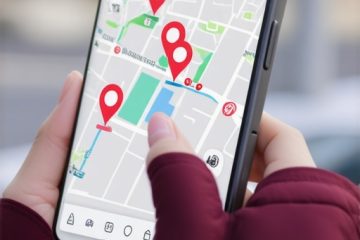
The proximity of a user to your business location is the most powerful ranking factor in the modern Google Maps algorithm. Google prioritizes physical distance over organic authority to ensure mobile users find immediate solutions within a three mile radius of their current GPS coordinates at that exact moment. This spatial reality means that your local business SEO growth is often capped by your physical location. You cannot rank in a neighborhood ten miles away if a competitor is sitting right on the corner. I have seen businesses with perfect citations lose to a guy with a half-optimized profile simply because he was 500 feet closer to the searcher. This is the Vicinity update in action. It narrowed the reach of dominant brands to give smaller, closer shops a chance. If you want to understand the fastest way to rank GMB, you have to accept the limits of your geographic footprint. You can expand your reach slightly through relevance and prominence, but you cannot defy the laws of physics. We use spatial zooming to identify where your proximity beacon starts to fade. Once we find that edge, we focus on hyperlocal signals to push the boundary just a few blocks further. It is a game of inches, not miles. Understanding local SEO for small business begins with mapping your actual reach versus your desired reach. If your service area is too broad, you dilute your authority at the core. Focus on the centroid. The closer you are to the searcher, the less you have to prove to the algorithm.
“Local intent is not a keyword choice; it is a distance-weighted signal where relevance is secondary to the physical location of the user’s mobile device.” – Map Search Fundamental
Why your physical address is a liability
A business address is no longer just a place of work; it is a data point that Google scrutinizes for legitimacy and spam signals. Shared office spaces, virtual addresses, and mismatched suite numbers can trigger immediate profile suspensions or cause your listing to be filtered out of the 3-pack results. I have investigated countless cases where a perfectly legitimate company vanished because they tried to rent a prestigious address in the city center while working from the suburbs. Google knows. They track the behavioral patterns of your employees and the location history of the photos you upload. If your map pin location is hurting your traffic, it is likely because you are caught in a proximity filter. The algorithm looks for NAP (Name, Address, Phone) consistency across the entire web. If your address is tied to five other businesses, you are a red flag. We look for the forensic trace of your business existence. This includes utility bills, signage, and even the type of building you occupy. A residential address for a retail business is a death sentence for rankings. You must understand the importance of GMB verification as a baseline, not a goal. Without a verified, unique physical presence, you are invisible to the local searcher. I have seen the Map Pack change in real-time as a user walks down a street. Your address determines which searchers see you. If you are in a crowded building, your competitors are right on top of you, making what your competitors are doing to stay in the top spots even more critical. You are fighting for the same spatial real estate.
Local Authority Reading List
- Expert GMB Citation Services
- Optimizing Your Listing Effectively
- Fastest Path to Ranking
- Current Ranking Factors
Finding the exact keywords local customers search for
Effective local keyword research requires shifting from broad industry terms to hyper-localized phrases that reflect how residents describe their own neighborhoods. Using Google Keyword Planner for GMB helps identify search volume, but the real gold is found in the ‘justifications’ that appear under your listing in the search results. These justifications often pull from your website or your reviews. If a customer says you have the best ‘organic sourdough in the heights’, that becomes a keyword signal. You should learn how to research GMB keywords like a pro by looking at your own insights data. Most agencies ignore the specific long-tail queries that actually drive phone calls. They chase ‘Plumber’ when they should be chasing ’emergency pipe repair in [Neighborhood Name]’. This is where the best GMB ranking strategies are won. You need to align your business description with the way people talk. If you use clinical, corporate language, you miss the emotional trigger of a local search. I once helped a client who was targeting ‘Legal Services’ when their actual customers were searching for ‘how to fight a noise complaint from my neighbor’. By changing the focus to hyperlocal problems, we bypassed the national competition. This is what Google My Business SEO is really about. It is about being the most relevant answer to a very specific, very local question. You can use tools to find these, but nothing beats reading your own customer reviews. If you are struggling, finding profitable keywords with Google tools is a great place to start. Stop guessing. Start listening to the data provided by your own neighbors.
The math of the service area polygon
Service area businesses must define their reach through precise polygons rather than arbitrary radius circles to avoid ranking dilution and potential spam filters. Defining specific zip codes or city names provides Google with clearer boundaries for where your mobile workforce actually operates and serves the local community. I have seen many contractors fail because they set a 50-mile radius from their home. Google sees this as unrealistic. It triggers a lack of trust. Instead, you should understand how to use local service areas to expand reach by being honest about your logistics. If your vans never cross the river, do not include the other side in your service area. The algorithm looks for signals of activity. This includes the geo-coordinates of the photos your workers take on the job. If all your photos are taken in one small pocket but you claim to serve the whole county, the discrepancy will hurt your visibility. This is a behavioral zoom. Google is watching the flow of your business. If you are wondering why your service area listing gets zero calls, it is often a trust issue. The algorithm prefers businesses that have a tight, logical service area. We also look at the JSON-LD ‘LocalBusiness’ attributes to ensure your service area is properly coded into your website. This helps with voice search and AI Overviews. When a user asks a virtual assistant for a pro ‘near me’, the AI looks for these specific geographic markers. You are not just a name; you are a set of coordinates in a global database. Be precise.
“Verification is the digital birth certificate of a business; without it, the entity exists in a state of algorithmic limbo where trust is impossible to build.” – Local Search Guidelines
Why manual citation building beats automated tools
Manual citation building ensures that every mention of your business across the web is accurate, formatted correctly, and placed on high-authority directories that Google actually trusts. Automated tools often create duplicate listings or leave behind messy data that confuses the algorithm and suppresses your local search rankings. I have spent years cleaning up the mess left by ‘citation blasts’. These services promise 500 links for fifty dollars. What they actually deliver is a graveyard of mismatched phone numbers and old addresses. You need to understand why manual building beats automation every single time. It is about quality, not quantity. A single mention on a local chamber of commerce site is worth more than a thousand links from a Russian directory. We perform a simple citation audit to fix broken rankings. If Google sees three different phone numbers for you, it does not know which one to show. This uncertainty leads to a lower ranking. You should also consider mobile friendly design for local search as part of your citation strategy. If your website does not load fast on a phone, the citation is wasted. People find you on the map, click your site, and leave. Google tracks this bounce. It tells them you are not a good result. Consistency in your NAP data is the foundation. Without it, your GMB photo optimization tips and review strategies will fail. You cannot build a house on sand. You must fix the data first. If you are overwhelmed, cleaning up duplicate citations should be your first priority. It is the most boring work in SEO, but it is the most vital for long-term growth.
The specific photo tweak that boosts map click through rates
Uploading high-resolution photos that were taken with a smartphone at your actual place of business provides Google with embedded GPS metadata that confirms your physical presence and builds consumer trust. Real, candid images of your team and office outperform professional stock photography by thirty percent in local search results. I can always tell when a business is using stock photos. They look too clean. They have no soul. The algorithm can tell too. It looks for the EXIF data in the image file. If the photo was taken at your office, it has the latitude and longitude baked in. This is a powerful proximity signal. I recommend the specific photo tweak of using customer-generated content. When a customer uploads a photo of their food or their new roof, it is a gold mine for SEO. It proves you were there. It proves the job was done. You should stop guessing which photos to post and start looking at what your customers are reacting to. Photos of your staff are also great. It humanizes the brand. People want to buy from people, not logos. This is a core part of optimizing business profile photos for impact. I have seen listings double their click-through rate just by changing the cover photo from a logo to a picture of the storefront. It tells the user exactly what to look for when they arrive. If you want to win, you have to be transparent. The street photographer in me sees the beauty in the candid shot. It is the truth of your business. Use it to your advantage.
About the Author
Mohamed Sabry
Optima Cleaners
Mohamed Sabry is a dedicated digital marketing specialist and local SEO expert with a strong academic foundation from The American University in Cairo. With a background that includes strategic roles at Optima Cleaners, Mohamed has developed a deep understanding of what it takes to make local service businesses stand out in a competitive digital landscape. His expertise lies in optimizing Google Business Profiles and implementing advanced SEO strategies that drive tangible growth and visibility for brands. At rankingseogmb.com, Mohamed leverages his analytical skills and practical experience to provide readers with actionable insights into search engine algorithms and local ranking factors. He is known for his meticulous approach to data and his ability to translate complex technical concepts into clear, effective strategies for business owners. Having earned top academic honors during his studies, Mohamed brings a high level of professionalism and excellence to every project he undertakes. He remains committed to staying at the forefront of the ever-evolving SEO industry to ensure his audience receives the most current and effective advice. Mohamed is deeply passionate about empowering small business owners and entrepreneurs to achieve their full potential through digital excellence.