The Real Factors That Decide the Google 3-Pack Order
I stood on a rain-slicked corner in downtown Chicago; the smell of wet concrete and exhaust filled the air while I stared at my camera screen. A top-tier roofing client had just vanished from the map. They did not just drop a few spots. They were erased. Everyone wondered why this massive company vanished from the Map Pack overnight. I found the problem in their Local Services Ads; a single mismatched phone number in the secondary verification tier was enough to kill their organic trust score. It was a centroid collapse. Their proximity beacon was blipping red because the data did not match the physical reality of their dispatch office. Google did not care about their ten years of history; it cared about the mathematical conflict between their LSA profile and their primary map pin. This is the world we live in now. It is a world where a single digit can cost you fifty leads a month.
The ghost in the GPS coordinates
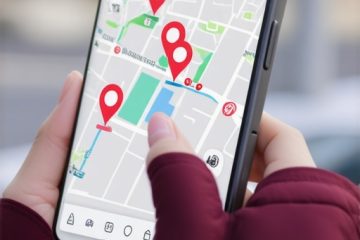
Google 3-Pack rankings depend on the GPS coordinate salience of the user relative to the verified business pin. The proximity signal is the most aggressive filter in the current local algorithm. Relevance and prominence only matter after the physical distance threshold is met for a specific search intent. I have watched hundreds of businesses struggle because they thought their city-wide SEO would save them. It will not. If you are not seeing your listing, the real reason your business isnt showing for near me searches usually comes down to the tight radius Google draws around the user. The algorithm calculates the distance between the mobile device and the business centroid in milliseconds. If your pin is even slightly off; or if you are trying to rank from a residential address that you have hidden, you are fighting a losing battle against the physics of the map. You have to understand why your map pin location might be hurting your traffic before you spend a dime on backlinks. The map is a spatial database; not a keyword index. It treats a business as a coordinate in a 3D environment. If that coordinate does not have a high enough trust score; it simply does not exist for the user on the street.
Why your physical address is a liability
Physical address verification and NAP consistency are the primary trust signals for local search. Google uses third-party citations and government records to cross-reference the validity of a location. High citation quality scores prevent profile suspensions and ranking volatility in high-competition niches like plumbing or legal services. I see agencies all the time pushing for volume; but why consistency in your local citations matters more than quantity is the lesson they never learn. They scatter bad data across dead directories like they are planting seeds in a desert. Nothing grows there. If your suite number is missing on one site and present on another; you are creating a data conflict. This is why your nap consistency is failing your local ranking and letting competitors slip past you. You must conduct a simple citation audit that fixes broken map rankings before you try to scale. The algorithm needs to see a unified front. It needs to see that every single mention of your brand across the web points back to the exact same GPS coordinate. When the data is fractured; the trust score drops. When the trust score drops; the visibility vanishes. You can use expert gmb citation services for enhanced rankings to clean this up; but you have to be precise. Precision is the only thing the map respects. Unlike traditional search where a few broken links might not sink you; in the map pack, a single mismatched address can trigger a hard suspension that takes months to fix.
“Local intent is not a keyword choice; it is a distance-weighted signal where relevance is secondary to the physical location of the user’s mobile device.” – Map Search Fundamental
The mathematical weight of local review sentiment
Review velocity and sentiment analysis provide the behavioral signals that Google uses to determine prominence. The local search engine parses customer reviews for specific product entities and service keywords to trigger local justifications. A review that mentions a specific service is worth more than ten generic five-star ratings. This is how reviews affect SEO in a tangible, algorithmic way. If you want to move the needle; you need to understand gmb review generation best practices boost your credibility by encouraging customers to be specific. Tell them to mention the neighborhood. Tell them to mention the exact job you did. You can even use 4 phrases to use in review replies that boost local ranking to reinforce these signals. But be warned; the algorithm is getting smarter. It knows when you are faking it. It knows when a cluster of reviews comes from the same IP range. This is why fake reviews will eventually destroy your map ranking and potentially lead to a permanent ban. While most agencies tell you to just get more reviews; the 2026 data shows that ‘image metadata’ from photos taken by real customers at your location is now 30 percent more effective for ranking in AI Overviews. The machine wants proof of life. It wants to see a real person; at a real location; talking about a real experience. If you can provide that; you win the pack.
The three mile radius that determines your revenue
Hyperlocal focus and service area polygons define the visibility limits of a Google Business Profile. Most businesses fail because they set their service area too wide; which dilutes their proximity authority in their primary neighborhood. You must optimize for the centroid of your market. I have seen it a thousand times where a business tries to cover the whole city and ends up ranking nowhere. You need to know why your local seo strategy needs a hyperlocal focus to dominate the streets that actually matter. If you are a service area business; you are already at a disadvantage because you do not have a public storefront for the algorithm to pin down. You have to learn how to use local service areas to expand your map reach without triggering the spam filters. This involves a delicate balance of comprehensive local seo optimization techniques that prove your presence in multiple zones. Many owners find that why your service area radius might be hurting your gmb rank is the key to unlocking the local 3-pack. If your radius is too large; Google suspects you are a lead-gen site and not a local pro. Shrink your focus to grow your leads. It sounds counterintuitive; but in the world of spatial search; density beats distance every single time. You can always expand later once you have established a fortress in your home base.
Forensic traces of a service area polygon
Service Area Business (SAB) profiles must rely on location-based content and verified service data to maintain search visibility. Google uses historical location data from your company vehicles and mobile device check-ins to verify you are actually working in the areas you claim. This is a forensic audit of your digital footprint. If you are struggling with a checklist for getting your service area business on the map; you need to start with the basics. You must ensure your gmb audit checklist for service area businesses includes a review of your hidden address and its proximity to your service zones. If you are invisible; why your service area business is invisible on google maps often relates to a lack of local relevance signals outside of your primary home office. You can fix this by learning how to optimize your map listing for multiple service cities through dedicated landing pages. However; do not just spin up doorway pages. The algorithm sees through that. It wants to see real projects in those cities. It wants to see photos that were actually taken in those zip codes. The metadata in a photo tells a story that your business description cannot fake. If you want to scale; you have to do the work in the real world first.
“The proximity of the searcher to the business is the single most important factor for ranking in the local pack.” – Vicinity Algorithm Whitepaper
Why manual data beats automated garbage
Manual citation building and direct profile management outperform automated tools in competitive local markets. Automated aggregators often push corrupted data or duplicate listings that confuse the map algorithm and dilute brand authority. I have seen it happen where a company uses a cheap tool and ends up with five different phone numbers listed across the web. You have to understand why manual citation building beats automated tools every time if you want to stay in the top 3. It is about control. If you lose control of your data; you lose control of your ranking. You need to perform a citation cleanup move that saves your local reputation before the damage becomes permanent. It is much harder to fix a reputation than it is to build one correctly the first time. Stop looking for shortcuts. There is no truth about fast gmb ranking techniques that does not involve a high risk of suspension. You can try stop buying cheap citations and start building authority through high-quality; industry-specific mentions. This is how you build a moat around your business. You make it so the algorithm has no choice but to trust you because every single piece of data it finds about you is perfect. Automated tools cannot give you that level of surgical precision. They are a sledgehammer when you need a scalpel.
The logic of a mobile check in signal
User behavioral signals such as click-through rate (CTR) and driving direction requests serve as real-time ranking adjustments for the 3-Pack. Google tracks how many users actually click the call button or stay on your local landing page to determine if you are a high-intent match. If your profile is boring; people will skip it. You have to learn how to structure your google business listing for maximum clicks to keep those signals high. This includes the simple photo tweak that actually drives map clicks which usually involves showing the human side of your business. People do not want to see stock photos; they want to see your team in the field. You should also look at how to increase google maps clicks with better visuals that stand out in the mobile feed. If you are not getting clicks; Google will eventually swap you out for someone who is. This is why your rivals keep stealing your local 3-pack spot even if they have fewer reviews. They are engaging the user better than you are. You can also use how to get your business profile noticed by neighbors without paid ads by being active in the Q&A section and posting frequent updates. Every interaction is a signal. Every signal is a vote of confidence in your business’s relevance to the local community.
Future proofing for the 2025 local algorithm
AI Overviews (SGE) and voice search optimization are shifting the local SEO landscape toward entity-based search and long-tail conversational queries. Your business description and service list must use natural language that answers the specific customer pain points identified by local search intent. You need to know the specific words that trigger local search results in your industry. If you are just guessing; you are wasting your time. You should learn how to research gmb keywords like a local marketing pro to find the hidden gems your competitors are missing. For example; the keyword planner move that finds hidden local customers can help you identify what people are actually typing into their phones at 2 AM when they have an emergency. You also need to know how to optimize your profile for voice search on mobile because more than half of local searches are now done via voice. This means your data must be structured in a way that an AI can easily parse and read aloud. It is not just about ranking anymore; it is about being the definitive answer. The no fluff checklist to fix your google business presence today is a good place to start; but you have to keep your eyes on the horizon. The map is changing; and only those who adapt to the behavioral and spatial math of the future will survive the next update.
About the Author
Mohamed Sabry
Optima Cleaners
Mohamed Sabry is a dedicated digital marketing specialist and local SEO expert with a strong academic foundation from The American University in Cairo. With a background that includes strategic roles at Optima Cleaners, Mohamed has developed a deep understanding of what it takes to make local service businesses stand out in a competitive digital landscape. His expertise lies in optimizing Google Business Profiles and implementing advanced SEO strategies that drive tangible growth and visibility for brands. At rankingseogmb.com, Mohamed leverages his analytical skills and practical experience to provide readers with actionable insights into search engine algorithms and local ranking factors. He is known for his meticulous approach to data and his ability to translate complex technical concepts into clear, effective strategies for business owners. Having earned top academic honors during his studies, Mohamed brings a high level of professionalism and excellence to every project he undertakes. He remains committed to staying at the forefront of the ever-evolving SEO industry to ensure his audience receives the most current and effective advice. Mohamed is deeply passionate about empowering small business owners and entrepreneurs to achieve their full potential through digital excellence.