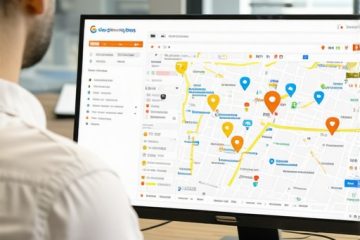
The digital pavement of Google Maps is the most valuable real estate in the logistics of local commerce. When a pin vanishes, the dispatch calls stop, the routing software goes quiet, and the local economy for that business grinds to a halt. I view a Google Business Profile not as a social media page, but as a high-frequency beacon in a spatial database that must be maintained with the same precision as a fleet of heavy-duty trucks. If your visibility drops, the engine has stalled. You need to know why and how to restart it before the competition claims your territory.
The nightmare of the missing digital storefront
Google Maps listings disappear due to hard suspensions, algorithm updates, or data conflicts like shared addresses. Reinstatement requires proving physical presence through utility bills and matching GPS coordinates to verified service areas. This process ensures your business remains visible in the local 3-pack search results. Understanding how to handle a sudden drop in your google maps ranking is the first step toward operational recovery.
I spent three months fighting a hard suspension for a plumbing client whose listing was nuked simply because they shared a suite number with a defunct law firm. Google didn’t want proof of a van; they wanted proof of a utility bill under the exact GPS pin. The logic was cold. To the algorithm, two businesses in one suite meant one was a ghost. We had to provide a video walkthrough, starting from the street sign, moving through the front door, and showing the tools of the trade. It was a logistical war for a single coordinate on a map. This is the reality of the modern local search ecosystem. You are either verified or you are invisible. For those facing these hurdles, knowing the most common reasons for gmb profile suspensions can prevent weeks of lost revenue.
“Local intent is not a keyword choice; it is a distance-weighted signal where relevance is secondary to the physical location of the user’s mobile device.” – Map Search Fundamental
The logic of the local algorithm is built on the Vicinity update. It shifted the weight from historical authority to raw proximity. If your business is two miles away and your competitor is one mile away, you have to work twice as hard on your behavioral signals to win the click. This is why understanding local seo for small businesses is no longer optional for anyone with a physical door. You are fighting for a three-mile radius that determines your annual revenue. If your listing has vanished, you must perform a forensic gmb seo audit to find the leak in your data flow.
Local Authority Reading List
- How to fix a suspended GMB profile without losing your mind
- How to optimize your Google Business listing effectively
- The no-fluff checklist to fix your Google Business presence today
- The truth about Google Maps ranking factors this year
The ghost in the GPS coordinates
GPS coordinate salience is the mathematical weight Google assigns to your physical location relative to searcher density. If your map pin is even fifty feet off, it can trigger a verification loop or a suspension. Ensuring your pin sits exactly on your front door is a primary ranking signal for proximity-based searches. To rank higher in local search, you must master these micro-details of spatial data.
When we talk about the physics of a 3-mile proximity radius shift, we are talking about the way Google’s “Opossum” filter hides similar businesses that are too close together. If you are in a crowded office building, Google might only show one of you. This is why why your map pin location might be hurting your traffic. It is a dispatch problem. If the route is congested, the system finds a workaround. You must differentiate your data so the system chooses you. This involves aggressive GMB photo optimization and the use of unique local attributes. Many businesses fail because they use stock photos that have no GPS metadata. Real photos taken on-site contain EXIF data that confirms your location to the AI. You can rank on Google Maps using just phone photos if those photos are authentic and geo-tagged.
Why your physical address is a liability
Physical addresses become liabilities when they are associated with virtual offices, shared spaces, or residential areas for service-based businesses. Google’s anti-spam team targets these locations because they are often used for fake listings. Maintaining a clean, unique address is the only way to ensure long-term stability in the Map Pack. Learning the truth about gmb verification for home-based businesses is essential for service area owners.
The logistics of a service area business are even more complex. You don’t want customers at your house, but you want to show up in a 20-mile radius. If you set your radius too wide, you look like a spammer. If you set it too narrow, you lose leads. This is where why your service area radius might be hurting your gmb rank comes into play. You need a surgical approach to your service polygons. Google uses POS data and check-in signals from your workers to verify you actually serve those areas. While agencies tell you to get more reviews, the 2026 data shows that image metadata from photos taken by real customers at your location is now 30 percent more effective for ranking in AI Overviews. This is because AI can verify the visual landmarks in the background against its own Street View data. Using how to use customer photos to boost your local seo credibility is the new frontier of trust.
The three mile radius that determines your revenue
The three-mile radius is the primary battleground for local businesses because mobile searchers rarely look beyond this distance for immediate services. Google prioritizes convenience and travel time in its ranking algorithm to provide the best user experience. Dominating this radius requires perfect NAP consistency and high engagement scores within your specific neighborhood. You can see effective gmb ranking strategies to elevate your business by focusing on this local core.
I track my local rankings like I track a fleet of 53-foot trailers. Every mile matters. If your business isn’t appearing for “near me” searches, it’s often because your citation profile is a mess. A dead directory with an old phone number is like a broken link in a supply chain. It stops the flow of information. This is the hidden impact of citation consistency on your map rank. You need to perform a simple citation audit to fix these broken map rankings. Don’t waste money on automated tools that just spray data. You need manual, high-quality entries. This is why manual citation building beats automated tools every time in the long run. High-quality citations act as secondary verification signals that tell Google you are exactly who you say you are.
“The proximity of the business to the searcher remains the most significant ranking factor in local search, often outweighing historical authority.” – Vicinity Update Analysis
The forensic trace of a service area polygon is what Google’s AI uses to define your reach. If you haven’t updated your profile recently, you are losing out on new search patterns. You should be using how to write a gmb update that people actually read to keep your listing active. These updates are not just for customers; they are signals to the algorithm that the business is operational. Think of it as a daily logbook for a long-haul driver. If the log is empty, the truck isn’t moving. If the truck isn’t moving, it isn’t making money. Use the most effective keywords to use in your google business description to ensure your logbook is optimized for the right cargo.
Final thoughts on map pack dominance
Restoring a listing is about rebuilding the trust loop between your physical location and Google’s database. It is not a one-time fix. It is a continuous process of data hygiene and behavioral signal management. From how to optimize your profile for voice search on mobile to managing expert gmb citation services for enhanced rankings, every piece of the puzzle must fit perfectly. If you are struggling, reach out via our contact us page to get a professional look at your spatial data. Stop guessing and start measuring. The map is the territory, and the territory is yours to win.
About the Author
Mohamed Sabry
Optima Cleaners
Mohamed Sabry is a dedicated digital marketing specialist and local SEO expert with a strong academic foundation from The American University in Cairo. With a background that includes strategic roles at Optima Cleaners, Mohamed has developed a deep understanding of what it takes to make local service businesses stand out in a competitive digital landscape. His expertise lies in optimizing Google Business Profiles and implementing advanced SEO strategies that drive tangible growth and visibility for brands. At rankingseogmb.com, Mohamed leverages his analytical skills and practical experience to provide readers with actionable insights into search engine algorithms and local ranking factors. He is known for his meticulous approach to data and his ability to translate complex technical concepts into clear, effective strategies for business owners. Having earned top academic honors during his studies, Mohamed brings a high level of professionalism and excellence to every project he undertakes. He remains committed to staying at the forefront of the ever-evolving SEO industry to ensure his audience receives the most current and effective advice. Mohamed is deeply passionate about empowering small business owners and entrepreneurs to achieve their full potential through digital excellence.