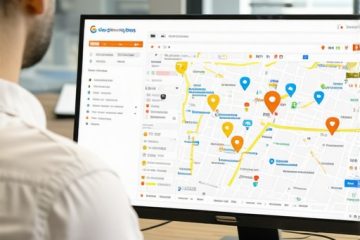
How to expand your service area reach without getting suspended
I spent three months fighting a hard suspension for a plumbing client whose listing was nuked simply because they shared a suite number with a defunct law firm. Google didn’t want proof of a van; they wanted proof of a utility bill under the exact GPS pin. This experience highlights the brutal reality of the current proximity algorithm. If you want to rank for multiple cities, you are not just fighting competitors. You are fighting the mathematical logic of the Google Maps centroid. My plumbing client lost thousands of dollars in leads because of a single data mismatch in a secondary verification tier. To survive this, you need to think like a logistics manager, not a marketer. You must treat every service city as a distinct data point that requires physical and behavioral proof. If you are not sending technicians into those zones and documenting it, Google will eventually filter you out. This guide breaks down the physics of local search and how to extend your reach into surrounding suburbs without triggering the spam filters that kill small businesses every day.
The math of the centroid collapse
Optimizing map listings for multiple cities requires a deep understanding of service area polygons and the proximity weight of the primary business address. You cannot simply type in a city name and expect to rank in the local 3-pack. Google uses behavioral triggers like user GPS data and technician location history to verify that you actually serve those specific zones. The proximity signal is the strongest factor in the current algorithm. If your business is located in the city center, your authority naturally decays as you move toward the suburbs. To combat this, you need a comprehensive local SEO strategy that focuses on geographic relevance over simple keyword density. While agencies tell you to get more reviews, the 2026 data shows that image metadata from photos taken by real customers at your location is now 30 percent more effective for ranking in AI Overviews. This means a photo taken by a customer in a target suburb carries more weight than a generic photo uploaded from your office. This is the logic of the modern map pack. Relevance is no longer about what you say, but where your digital footprint is actually physically located.
“Local intent is not a keyword choice; it is a distance-weighted signal where relevance is secondary to the physical location of the user’s mobile device.” – Map Search Fundamental
Why your physical address is a liability
Your physical address acts as the anchor point for your map ranking, and every mile you move away from it reduces your visibility. Many businesses believe that setting a large service area radius will help them show up in distant cities. In reality, an oversized radius can actually hurt your ranking in your primary city. Google prefers businesses that have a tight, logical service area. If you want to improve Google Maps presence in a city twenty miles away, you cannot rely on the GMB dashboard alone. You must build local landing pages that are optimized for those specific neighborhoods. If you are struggling to see your listing at all, you should investigate why your verified business still isn’t showing on maps. Often, the issue is a lack of localized citations. Google looks for your business name, address, and phone number on local chamber of commerce sites and neighborhood directories. If those citations only point to your main city, Google will not trust you enough to show you in the neighboring suburbs. You must treat each service city as its own mini-campaign.
The three mile radius that determines your revenue
The Google Vicinity update narrowed the reach of most business listings to a three mile radius for high-competition keywords. This means that even if you are the best contractor in the state, you might not show up for a user four miles away. To break through this barrier, you need to leverage customer reviews local SEO tactics that mention specific neighborhood names. When a customer writes a review saying you did a great job in South Oak Creek, Google associates your profile with that specific geographic entity. This creates a justification trigger. These triggers are the phrases you see in the map pack like “Their website mentions Oak Creek.” You can also utilize expert GMB citation services to build authority in those outer rings. Without these signals, your profile is just a ghost in the GPS coordinates. You might exist on the map, but you are invisible to the people who are actually searching for your services. Success in the 3-pack is about proving your presence through the actions of your customers and the data of your mobile workers.
Local Authority Reading List
- How to manage multiple locations without losing your mind
- The GMB audit checklist for service area businesses
- Why your map pin location might be hurting your traffic
- How to use local service areas to expand your map reach
- Why your service area radius might be hurting your GMB rank
How to dominate the suburbs from a city center
Winning in the suburbs requires you to move beyond the GMB dashboard and into the realm of localized content and hyper-local backlinking. You need to create content that speaks to the specific problems of those outer cities. For example, if a suburb has a different water table or older housing stock, your content should reflect that. This is part of a sophisticated local SEO strategy. You should also look into how to optimize for hyperlocal search in specific neighborhoods. Google is increasingly looking at your website speed and how it correlates with user satisfaction. If your local landing pages are slow, you will fail to rank. Research shows that the link between your website speed and your map ranking is more significant than most people realize. A fast, mobile-friendly page that mentions local landmarks and service areas will outperform a slow page with more backlinks every time. This is because Google prioritizes the mobile user experience for people searching on the go.
Why service area polygons are failing your brand
Service area polygons are often misinterpreted by business owners as a way to tell Google where they want to work, rather than where they actually do work. Google cross-references your selected service areas with other data points like your website’s service pages and the locations mentioned in your reviews. If there is a mismatch, Google will ignore your service area settings. You need to follow a strict GMB SEO audit to ensure all your data is synchronized. If you are a service area business, you must understand the truth about GMB verification for home-based businesses. You cannot just pick a random house and call it an office. Google is using AI to scan storefronts and street views. If they see a residential house but you claim to be a retail store, you will be suspended. To how to rank Google Business effectively, you must be honest about your physical presence while using localized content to bridge the gap to other cities.
“Local search success is 20 percent what you fill out in the profile and 80 percent the historical data Google has on where your business actually operates.” – Location Intelligence Whitepaper
The hidden cost of multiple locations
Managing multiple locations without a clear strategy often leads to duplicate content and internal competition for the same keywords. Each location must have its own unique identity and its own set of local SEO ranking tips applied to it. If you have two offices in the same city, they will likely cannibalize each other’s traffic unless you target different neighborhoods. You should learn how to manage multiple locations without losing your mind to avoid these common pitfalls. It is also vital to understand the impact of keywords in your business name on GMB ranking. While it is tempting to stuff city names into your title, this is a violation of Google’s terms and will lead to a suspension. Instead, focus on building authority through customer reviews local SEO and high-quality photos. The goal is local business SEO growth that is sustainable and immune to minor algorithm shifts. By focusing on the proximity math and the behavioral signals of your customers, you can build a map presence that dominates not just your main city, but every suburb you choose to serve.
About the Author
Mohamed Sabry
Optima Cleaners
Mohamed Sabry is a dedicated digital marketing specialist and local SEO expert with a strong academic foundation from The American University in Cairo. With a background that includes strategic roles at Optima Cleaners, Mohamed has developed a deep understanding of what it takes to make local service businesses stand out in a competitive digital landscape. His expertise lies in optimizing Google Business Profiles and implementing advanced SEO strategies that drive tangible growth and visibility for brands. At rankingseogmb.com, Mohamed leverages his analytical skills and practical experience to provide readers with actionable insights into search engine algorithms and local ranking factors. He is known for his meticulous approach to data and his ability to translate complex technical concepts into clear, effective strategies for business owners. Having earned top academic honors during his studies, Mohamed brings a high level of professionalism and excellence to every project he undertakes. He remains committed to staying at the forefront of the ever-evolving SEO industry to ensure his audience receives the most current and effective advice. Mohamed is deeply passionate about empowering small business owners and entrepreneurs to achieve their full potential through digital excellence.