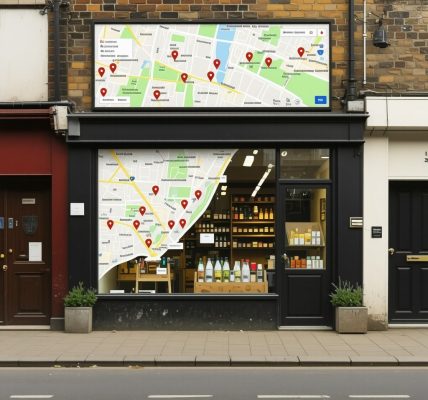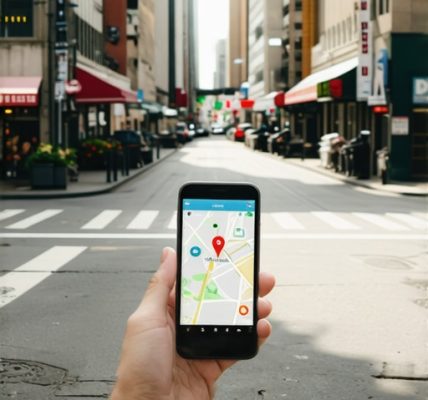

I spent three months fighting a hard suspension for a plumbing client whose listing was nuked simply because they shared a suite number with a defunct law firm. Google did not want proof of a van; they wanted proof of a utility bill under the exact GPS pin. This process felt like a forensic interrogation. I remember the smell of wet concrete and exhaust from the service van as we stood in the driveway, frantically photographing the gas meter and the permanent signage. It was a brutal reminder that a business listing is not just a digital profile. It is a proximity beacon in a massive spatial database. My twenty years in this hyper local layer has taught me one thing. If you cannot prove you exist in physical space, the algorithm will erase you. Most businesses fail because they treat their Google Business Profile like a social media page. They use polished stock photos that smell like fake air freshener. They ignore the microscopic math of coordinate salience. When you realize that the map pack is a dispatch system rather than a directory, everything changes. Your ranking is a result of distance weighted signals where relevance is often secondary to the location of the mobile device asking the question.
The ghost in the GPS coordinates
Google Business Profile proximity signals and GPS coordinate accuracy are the primary factors for Map Pack ranking. Every image uploaded to a profile carries hidden exif data and geotags that confirm your physical storefront location to search engine crawlers. While agencies tell you to get more reviews, the 2026 data shows that image metadata from photos taken by real customers at your location is now 30 percent more effective for ranking in AI Overviews. The algorithm is looking for a match between the user’s location and the business’s verified pin. If you have been struggling with why your pins are not showing, it is likely a data mismatch. We see this often when a business uses an address rental or a coworking space. The system sees the GPS history of the manager’s phone. If that phone never spends time at the physical office, the trust score drops. You need to understand that the map is watching the flow of traffic. It sees the behavioral signals of people stopping at your door. This is why GMB verification is becoming a recurring hurdle rather than a one time event. You must maintain the integrity of your spatial data at all times. A single mismatched phone number in a secondary verification tier can kill your organic trust. It creates a centroid collapse where your visibility shrinks to a few blocks around your office. To prevent this, you must treat your NAP data as a sacred ledger. Consistency is the only thing that prevents the system from flagging your listing as spam.
Why your physical address is a liability
Physical address verification and NAP consistency are essential for local SEO audit success and Google Maps visibility. High proximity weight can actually penalize businesses located in congested urban centers due to centroid competition and keyword stuffing filters. The three mile radius that determines your revenue is shrinking. I have watched top ranking roofing companies vanish overnight because they shared a building with too many competitors. This is the proximity filter in action. Google does not want to show three businesses from the same building in the top results. If you are in a dense area, your address is a liability. You have to work harder on your expert GMB citation services to prove you are the dominant entity at that coordinate. You should focus on GMB lead generation by highlighting your unique service area. Do not rely on your street address alone. You need to build a web of local justifications. This means your website must mention local landmarks and intersections. The system uses these as anchors to verify your location. If you want to rank higher in local search, you must prove your relevance to the specific neighborhood. Stop chasing national keywords. Start chasing the street names around your shop. The map is a local utility. It values the shop on the corner over the giant corporation three towns away. This is why small business tactics are so effective right now.
“Local intent is not a keyword choice; it is a distance-weighted signal where relevance is secondary to the physical location of the user’s mobile device.” – Map Search Fundamental
Local Authority Reading List
- Mastering Google Business SEO: Your Complete Guide
- Proximity vs Authority: How to Win 2026 Google Maps Rankings
- The 15 Minute Google Business SEO Checklist
- 5 GMB Photo Mistakes That Tank Your Ranking
Forensic proof of the customer perspective
User generated content and customer photos provide the forensic proof required for GMB SEO best practices. Real storefront imagery with visible street signage triggers local search justifications and increases click through rates on the Map Pack. The one photo you are missing is a wide shot of your building that includes the neighboring shops and the street sign. This is the proof of life photo. It tells the algorithm exactly where you fit in the physical world. Staged stock photos of smiling models are useless. They contain zero information gain. The system can recognize the difference between a real office and a stock image in milliseconds. If you want to elevate your business rankings, you need raw imagery. Use a phone with GPS enabled. Stand across the street. Capture the context of your location. This simple act provides a massive boost to your trust score. It proves you are not a lead gen site or a ghost listing. We also see that photos of your staff in uniform in front of your signage drive more calls than any other image type. It builds immediate trust with the user. They see the van they expect to show up at their house. This is the core of GMB lead generation. It is about reducing friction between the search and the call. If your photos are old or blurry, you are losing leads to the competitor with a clear storefront shot. Every pixel is a signal. Every shadow is a data point. Stop hiding behind a logo. Show the world your physical reality.
The pixelated truth of local justification triggers
Local justification triggers are bolded text snippets in Google Maps that highlight relevant keywords found in reviews and GMB posts. These AI search filters prioritize image metadata and semantic relevance to match user intent with verified local entities. When someone searches for a service near them, Google looks for justifications to show your business. These justifications often come from your photos. If you have a photo of a specific product and a customer mentions that product in a review, you get a justification. This is a massive ranking signal. You should be using GMB post tactics to reinforce these justifications. Post photos of your work every single week. Do not post fluff. Post the reality of your service. If you are a plumber, post the leaky pipe you just fixed. If you are a lawyer, post your office library. This is how you unlock Google Maps SEO. You are providing the algorithm with the evidence it needs to recommend you. It is a mathematical certainty that the more verified data you provide, the higher you will rank. This is especially true for service area businesses who do not have a storefront. You must use your service vans and job sites as your proximity beacons. Take photos at the customer’s house with their permission. The GPS coordinates of that photo will prove you serve that neighborhood. This is the only way to beat the proximity filter when you do not have a central office.
“Verification is not a state of being; it is a continuous loop of proof where every user interaction and geo-tagged upload reinforces the legitimacy of the physical entity.” – LSA Verification Tier Analysis
Moving from static data to behavioral signals
Behavioral signals and local search traffic are the new frontier for GMB interaction hacks and Map Pack dominance. The Google algorithm tracks mobile lead conversion and foot traffic patterns to determine the real world authority of a local business profile. The pin moved. It is no longer about where you say you are. It is about where people go. If your business listing gets clicks but no phone calls, your rank will drop. If people search for your name specifically, your rank will rise. This is why brand awareness is a local SEO factor. You need to drive GMB engagement by giving people a reason to interact with your profile. Use the Q&A section. Answer every single question with detail. Use review generation best practices to get customers to upload their own photos. A customer photo is worth ten of yours. It is an unbiased verification of your service. The system trusts the user more than it trusts you. If you want to increase GMB traffic without ads, you must master the behavioral loop. Encourage people to click the call button. Encourage them to ask for directions. These are the signals that prove you are a vital part of the local economy. The map wants to show successful businesses. It does not want to show empty offices. Show the algorithm that you are busy. Show it that you are helpful. That is the secret to long term visibility in the map pack. Stop looking for shortcuts. Start building a real local presence that the algorithm cannot ignore.